


The Chase - World Tour
4.651.00 Reviews
App Specs
- Version
- 1.14.1
- Updated On
- License
- Free
- Downloads
- 10,000+
- Developer
- Barnstorm Games
- Categories
- Trivia
- Platform
- Android
Screenshots




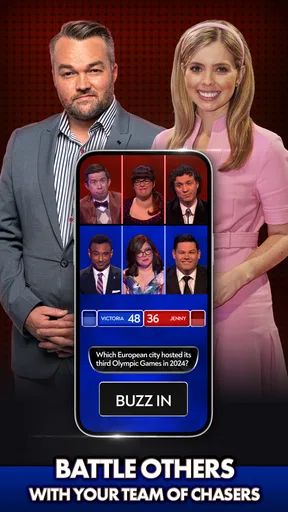



 Analysis by AppCompare
I enjoy trivia games most when they create a little pressure without turning a quiet evening into a complicated project. The Chase - World Tour aims for exactly that balance: it brings the familiar quiz-show challenge to a phone, with the central question being whether I can answer well enough to stay ahead of the Chaser. It is a free game in the trivia category from Barnstorm Games, and after spending time with it, I see its appeal more clearly as a quick, repeatable test of knowledge rather than a deep strategy game.
The basic attraction is easy to understand. I answer questions, try to build confidence, and face the tension of being pursued by a strong opponent. That structure gives ordinary trivia a sense of occasion. A wrong answer is not merely a missed point; it can change the whole feeling of a run. The result is a game that works particularly well when I have a few spare minutes and want something more engaging than scrolling through a general quiz feed.
How a normal session feels from the first question
The best way to approach this game is to treat each session as a compact quiz-show appearance. I do not open it expecting a long campaign that demands a large time commitment. Instead, I settle in for a focused attempt, read each question carefully, and make a decision before doubt starts to take over. That simple habit matters because trivia games often punish hesitation almost as much as ignorance.
The show-inspired format gives the questions more emotional weight than a standard list of unrelated multiple-choice prompts. I am not just collecting correct answers in a vacuum; I am trying to survive a contest. Even when I know the subject well, the pressure of the Chaser makes familiar questions feel less automatic. When I am unsure, the game encourages a practical choice: trust the first answer that seems well supported, or pause long enough to eliminate the weaker possibilities.
That makes the game suitable for several everyday situations. I can play a short session while waiting for an appointment, use it as a quick mental warm-up before studying, or pass a phone around during a casual gathering. It is also a reasonable choice for someone who enjoys television quiz formats but does not want a complicated board, card collection, or long rules explanation.
For a shared session, I find it more enjoyable when players discuss answers only after a question has been resolved. That keeps the pressure intact and turns mistakes into conversation rather than argument. A group can also use each round as a way to identify subjects where everyone is confident and areas where the room needs a refresher. The game is not a replacement for a dedicated party title, but its short-question rhythm makes informal participation easy.
The age rating is Everyone, which fits the straightforward quiz presentation. Still, “suitable for everyone” does not mean every question will be equally accessible to every player. Knowledge depends on age, interests, education, and familiarity with the subjects represented. I would therefore treat it as family-friendly entertainment, while remembering that younger players may need encouragement rather than a serious expectation of winning.
Worth Reading Before You Choose

Flipboard Shows What News Apps Must Do Beyond the Feed

Switching to Android Auto Means Rethinking Your Driving Routine

Google Calendar Makes a Crowded Week Easier to Manage

Ludo King Makes the Most of the Minutes Between Plans

Baby Panda World Brings Quick Play to Modern Phones, but Its Game Library Feels Busy

ESPN’s Live Game View Makes Following Close Games Easier
Small habits that improve the baseline workflow
My most useful routine is to separate answering from reviewing. During a run, I focus on the current decision and avoid mentally replaying an earlier mistake. Afterward, I think about why I missed something: did I misread the wording, confuse two similar facts, or choose a plausible answer too quickly? That distinction makes repeat sessions more valuable because I am training judgment, not merely hoping to see familiar questions again.
I also recommend playing when attention is available. This sounds obvious, but trivia depends heavily on reading accuracy. A noisy room, a low battery, or a rushed moment can make a question feel harder than it really is. If I am playing casually, I accept that result. If I am trying to improve, I use a quieter moment and treat the session as a concentration exercise.
Another useful habit is to notice patterns in personal confidence. I may be strong at history but unreliable with entertainment, or comfortable with broad science while struggling with precise names. The game becomes more interesting when I stop defining success only by the final outcome and start tracking these personal subject boundaries. That approach also makes it easier to decide whether the title offers enough variety for me over time.
Settings and purchase decisions worth checking
Before settling into regular play, I would look through the available settings and make sure the presentation suits the way I intend to use the game. I prefer readable text, comfortable sound levels, and a distraction-free setup. These are modest adjustments, but they matter in a question-based game because the interface should disappear while I am thinking.
I would also check the current version shown on the device before judging performance or presentation. The listed current version is 1.14.1, and the game requires Android 6.0 or later. That makes it accessible to many older Android devices, although compatibility alone does not guarantee that every phone will feel equally smooth or comfortable. A smaller screen can make reading less pleasant, especially during a hurried question.
The game is free to install, which makes trying the core experience an easy decision. It does include in-app purchases ranging from $0.99 to $99.99 per item, so I would be careful with purchase controls if children use the phone or if the device is shared. My advice is simple: play enough of the free experience to decide whether the question format genuinely holds your attention before spending money on optional items.
That price range deserves a thoughtful response rather than an automatic complaint. Optional spending can be reasonable for someone who plays often and wants to support continued use, but it is not necessary for every trivia fan. If I only want an occasional quiz, the free entry point is the important part. If I am looking for unlimited value from a single purchase, I would inspect each purchase prompt carefully and compare it with other trivia options before committing.
There is another setting-related point that experienced users sometimes overlook: the phone itself becomes part of the game environment. I keep notifications quiet when I want a serious run, because an incoming message can break concentration at exactly the wrong moment. I also avoid playing while multitasking. The game’s appeal comes from focused decisions, and its pressure feels less fair when my attention is divided.
Faster patterns without turning the game into guesswork
Speed in this game should not mean tapping immediately. The better shortcut is a repeatable reading pattern. I first identify what the question is actually asking, then scan the choices for obvious category mismatches, and only afterward compare the remaining answers. This prevents a familiar word in one option from pulling me away from the question’s real subject.
When two answers look close, I try to explain the difference to myself in one short sentence. If I cannot do that, I am probably relying on recognition rather than knowledge. That does not guarantee the right choice, but it reduces impulsive answers and makes my decisions more consistent. In a game built around pressure, consistency is more useful than occasional flashes of confidence.
I also use a “commit and move on” rule. Once I have eliminated the weaker choices and selected the answer with the best reasoning behind it, I stop reopening the decision unless the wording gives me a clear reason to reconsider. Constantly switching between answers can feel analytical, but it often reflects anxiety instead. The Chaser creates enough pressure already; I do not need to add a second opponent in my own head.
For learning, I make a mental note of questions that expose a genuine gap rather than questions I missed because I read too quickly. Later, I can look up the subject outside the game if I want to improve. This turns a short session into a useful study prompt without pretending that the game itself is a complete educational course. It is strongest as an engaging test and a way to discover what I do not know.
There is also a practical social shortcut: use the game to start a discussion, not to prove who is smartest. A player who explains why an answer seemed convincing can make even a wrong response interesting. That is especially helpful with mixed-ability groups, where a strict winner-takes-all approach may cause less confident players to stop participating.
Where the challenge works, and where it reaches its limits
The show format is the game’s biggest strength, but it also defines its limits. Players who enjoy recognizable quiz-show tension will probably appreciate the atmosphere and clear objective. Players who prefer open-ended exploration, elaborate progression systems, or a large strategic layer may find the experience comparatively narrow. This is a focused trivia game, not a role-playing adventure disguised as a quiz.
Compared with a general trivia app, the advantage here is the sense of pursuit. A conventional quiz can become a private score chase, while this game gives each answer a stronger consequence within the contest. On the other hand, a broad quiz app may be better for someone who wants extensive topic selection, custom question sets, or a more relaxed pace. The right choice depends on whether I value the television-style challenge more than flexibility.
It is also different from a traditional board game. A board game can create richer face-to-face interaction and may be better for a planned family night, while this title is much easier to start alone. I do not need to organize pieces, explain a long ruleset, or persuade everyone to commit to a full evening. The trade-off is that the phone screen cannot reproduce the same physical social energy as people gathered around a table.
Players should also be realistic about replay value. Trivia can remain enjoyable for a long time when the subjects feel varied and the competitive tension stays fresh, but personal familiarity changes the experience. If I begin recognizing too many prompts, the challenge may shift from knowledge to memory. That is not necessarily a flaw, but it means I should judge the game by how much I enjoy the contest itself, not only by whether every session feels completely new.
The Chaser theme can make a difficult run feel exciting, but it can also make a poor run feel abrupt. Someone who dislikes losing progress or being placed under time pressure may prefer a calmer quiz with no pursuing opponent. This is one of the clearest cases where another option would be better: if I want trivia purely for relaxation, a slower format with no dramatic elimination may suit me more.
Who will get the most from it?
I would recommend it first to fans of television quiz shows, people who enjoy testing general knowledge in short bursts, and families or friends who want an easy conversation starter. It is also a good fit for players who like a clear goal in each session. The question is not simply whether I know facts; it is whether I can keep making sound choices while the contest pushes me forward.
I would be more cautious about recommending it to players seeking a comprehensive learning tool. It can reveal weak areas and encourage curiosity, but it does not replace a structured course, reference book, or dedicated flashcard system. Likewise, players who dislike optional purchase prompts should decide in advance that the free experience is their boundary and avoid treating every offer as part of the required game.
The free price makes experimentation straightforward, while the 4.6 average from 165 ratings suggests that the overall reception has been strong. With over 10K installs, it has also found a real audience without feeling like an obscure experiment. Those figures do not decide whether I will enjoy it, but they give me enough confidence to try it rather than dismiss it immediately.
Barnstorm Games is a sensible developer match for this kind of licensed-feeling quiz-show adaptation, and the presentation is centered on the contest rather than unnecessary complexity. I appreciate that focus. At the same time, anyone expecting a huge standalone game with a deep world, extensive customization, or a long narrative should adjust expectations before downloading.
My mastery verdict after building a repeatable approach
My preferred way to play is now quite simple: choose a quiet moment, check that the phone is comfortable to use, read every question for meaning rather than keywords, eliminate weak answers, commit once, and review only the mistakes that reveal a real knowledge gap. That workflow makes the game feel less like random tapping and more like a compact exercise in recall, judgment, and composure.
The most important trade-off is between drama and freedom. The Chaser gives ordinary trivia a memorable shape, but that same structure may feel restrictive to someone who wants complete control over topics and pace. For me, the pressure is what separates this experience from a routine quiz app. I do not play it because it offers the broadest possible toolbox; I play it because the format makes each answer matter.
My recommendation is to try it if you want a quick, show-inspired trivia contest rather than a full educational platform. Keep spending optional, use the free version to test its staying power, and pay attention to whether you enjoy the pursuit as much as the questions. For casual solo play, friendly competition, and short bursts of focused entertainment, it is an appealing choice. If you want a slower quiz, deeper customization, or a richer multiplayer board-game feeling, another format will probably serve you better.
In the end, The Chase - World Tour succeeds when I treat it as a tense little performance: not a substitute for every other trivia game, but a focused challenge with a clear personality. Its strongest moments come from the combination of familiar quiz-show pressure and the need to make sensible decisions quickly. That is enough to keep me returning for another attempt, especially when I have a few minutes and feel like finding out whether my knowledge can stay ahead of the Chaser.
Pros
- Fast-paced trivia rounds are easy to pick up and play anywhere.
- Global tour structure gives matches a clear sense of progression.
- Multiple quiz categories help keep question sets varied.
- Short games work well for quick sessions during spare time.
- Competitive scoring adds replay value for trivia fans.
Cons
- Some questions may feel too difficult without broad general knowledge.
- Progress can become repetitive after playing several rounds.
- Online features may depend heavily on a stable internet connection.
- Random question difficulty can make some matches feel unbalanced.
- Frequent play may encourage optional purchases or ad interruptions.
FAQs for The Chase - World Tour
What is The Chase – World Tour?
The Chase – World Tour is a trivia game based on the popular television quiz show format. You answer general-knowledge questions, compete against virtual opponents inspired by the show’s Chasers, and travel through different locations as you progress. The game is designed for short sessions, making it suitable for casual play, although the difficulty can increase noticeably in later rounds.
How does the gameplay work in The Chase – World Tour?
The main objective is to answer questions correctly and earn money or points while trying to stay ahead of the Chaser. Depending on the round, you may need to choose from multiple answers under time pressure and make strategic decisions about risk and reward. Fast thinking is important, but knowing when to play safely can be just as valuable as taking a bigger offer.
Can I play The Chase – World Tour offline?
Some parts of the game may remain accessible without a constant connection, but online access can be required for downloading content, synchronizing progress, displaying advertisements, or using certain features. Availability may also differ according to the version installed and the device being used. For the most reliable experience, it is best to launch the game while connected to the internet.
Is The Chase – World Tour free to download and play?
The Chase – World Tour is generally available as a free download, but the free experience may include advertising, optional purchases, or other limitations. These can relate to extra resources, removing ads, or progressing more quickly. You can normally play without spending money, although patience may be necessary if the game uses waiting systems or restricts some attempts.
Is The Chase – World Tour suitable for all ages?
The game is primarily aimed at fans of quiz shows and players who enjoy general-knowledge challenges. Its content is usually more educational and competitive than action-oriented, so it can be appropriate for a broad audience. However, younger players may encounter advertisements or purchase options, and the difficulty of the questions may be better suited to older children, teenagers, and adults.


